
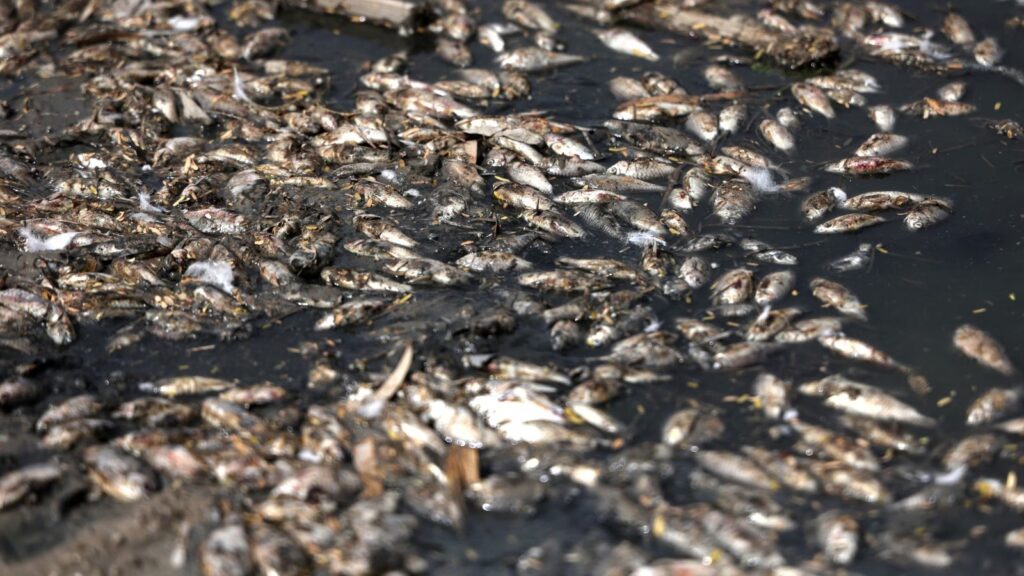
The fish in Sanjay Lake did not just die because of mere bad luck. They died because we as a society stopped caring enough about our lakes, our ecosystems and the delicate living systems that actually keep our cities liveable and breathable.
Last week, hundred of fishes floated around dead on the surface of the Sanjay Lake situated in East Delhi’s Trilokpuri. Sanjay Lake is a 52.53 -acre water body that no longer sustains itself, it depends on treated wastewater pumped in from the Kondli Sewage Treatment Plant. A pipeline that was supplying the treated water was shut down for repairs during the time of epic heatwave in Delhi, and no other backup was arranged. The aftermath of the situation was decided by the heatwave, the water levels dropped, oxygen vanished and the fish suffocated in what should have been their safe home.
It sounds like a local problem. It isn’t.
This is the story that goes around in every Indian city in the present day. Mumbai, Bengaluru, Chennai, Hyderabad and many more, all of them have watched their lakes shrink year by year, their wetlands fill with concrete, their water bodies choked with sewage and neglect. Delhi alone has lost the considerable amount of its historical lakes over the past century. What remains is barely alive, dependent on engineered water supply, and one administrative failure away from collapse.
Urban water bodies are not just a scene for decoration. They absorb heat, recharge groundwater, and buffer communities against floods and rising temperatures. We are building cities at an incredible speed. But we are building them by dismantling the very systems that make urban life survivable.
The fish are gone. But the question they leave behind is alive and urgent, what kind of cities are we building, and for whom?
Refrences
About the Author
Anushka Ahlawat
A fourth year Environmental Science and Sustainability student trying her best to make the environment a healthier place to live in.
Author is doing wonderful job creating awareness about the ecosystem we need for better present and future generations.
This is so sad.
And urban residents long for a healthy water body in their areas for the freshness they bring.
I know of citizen groups reviving lakes in Bangalore. Is there something similar happening in Delhi too?