
Delhi's Last Wild Edges
Why the Ridge matters to Delhi’s Wildlife
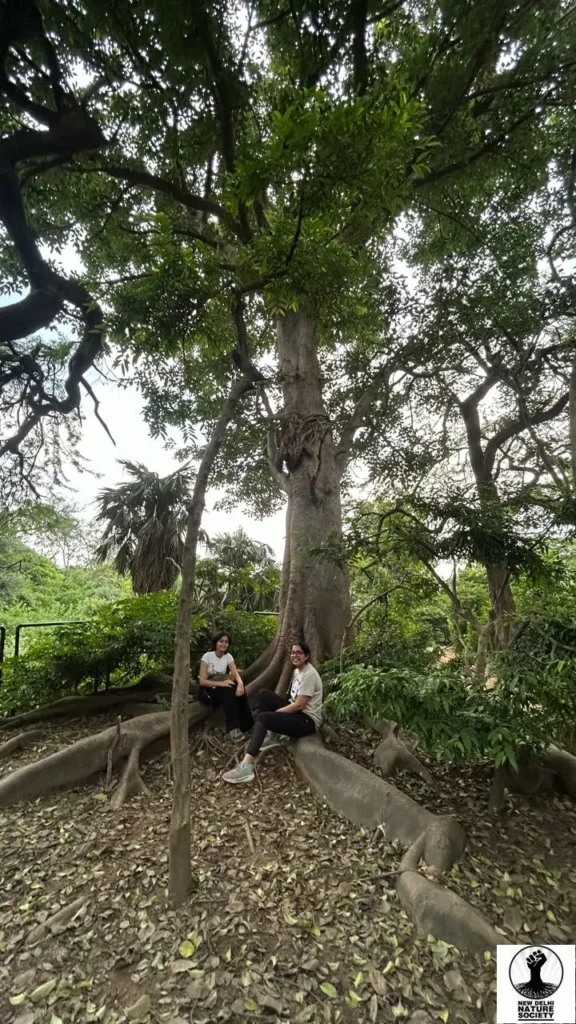
Growing up, I always saw more greenery in Delhi than one would assume would be accessible in a city known for its annual air pollution festival. Much of that came from the privilege of growing up surrounded by the trees and open spaces of a University campus. But right outside those University gates was a stark contrast: failing infrastructure and cemented roads that could clog up after just a few minutes of monsoon rain. Many people living in Delhi, however, remain unaware of the green spaces that exist within the city, including its network of biodiversity parks and forested areas. I was introduced to one such space when I came to the North Campus for my higher studies – the Kamla Nehru Ridge, part of the larger Delhi Ridge Forest.
A green space is not necessarily a forest, and a forest isn’t simply a collection of trees. In 1996, it was determined that areas exceeding 2.5 acres with a density of at least 100 trees per acre, stretches of land along roads and drains extending for 1 km would be treated as deemed forests. Spread over nearly 7,784 hectares, the Delhi Ridge is divided into four zones, the Northern Ridge, which includes the Kamla Nehru Ridge, the Central Ridge, the South-Central Ridge and the Southern Ridge. Popularly referred to as the “lungs” of Delhi, the protected forest landscape has a much more complex function as part of the city’s ecological infrastructure. But protecting a forest on paper is only one part of conserving a living habitat, home to at least 25 wild mammal species, 471 bird species, 86 butterfly species and 237 plant species.
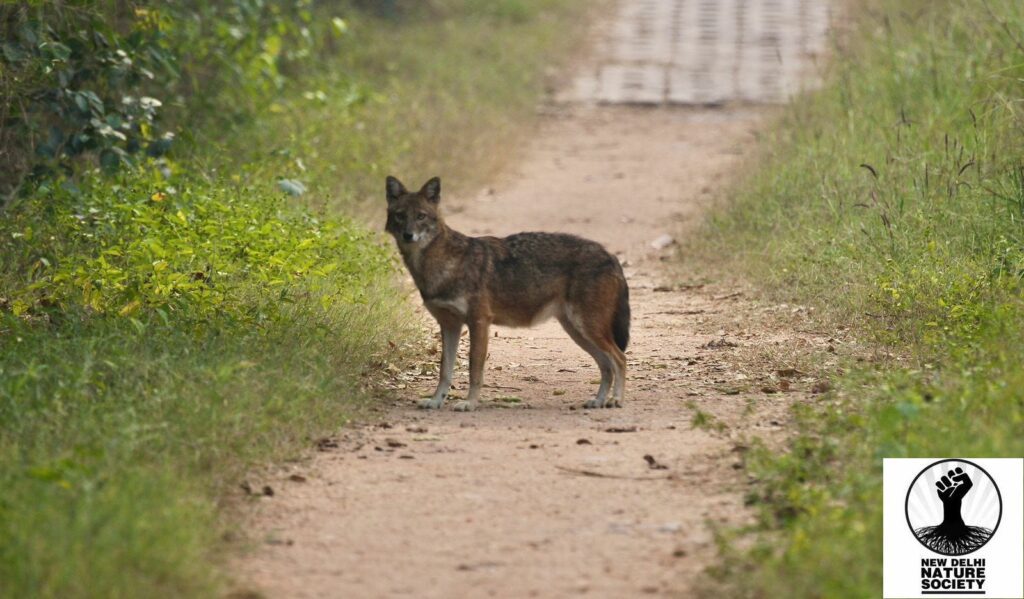
The native trees of the northern Aravallis like Dhau, Dhak, Ronjh, Khair and Phulai have xerophytic adaptations, which means they can tolerate drought-like conditions, supporting mammals such as leopards, hyenas, hares, civet cats, nilgai, monkeys and reptiles like frogs, toads and snakes, as reported by the Department of Forests & Wildlife.
Asola-Bhatti sanctuary, on the Southern Delhi Ridge, has also recorded threatened and near-threatened species, including Red-Headed vulture, Egyptian Vulture, Steppe Eagle, Greater Spotted eagle and Indian spotted Eagle. The value of the Ridge is also determined by what surrounds it. In a city where natural landscapes have been fragmented, even a relatively intact patch of habitat can provide refuge for species that have few places left to go. But if one looks at the Ridge as a passive ecological zone, its protection can easily become someone else’s responsibility: the government’s, the forest department’s, or the environmentalists’.
This World Wildlife Week, the Delhi Ridge offers a useful place to begin thinking about what wildlife conservation means inside a city. Its importance is not just limited to maintaining the city’s ecological balance: it is also a habitat for species that many Delhi residents may never notice. It is their home just as it is ours.
The idea of ‘nature’ as separate from us
Decades of urban expansion, sometimes unplanned and unchecked, have created a duality where we claim to protect the Ridge while encroaching on it. The latest controversy has centred on the Delhi government’s March 2026 announcement of developing four “themed forests” inside the Central Ridge, one of the last ecologically intact reserved forests in the capital, named Tirthankar Van, Ritu Van, Rashi Van, and Panchvati Van. The first is inspired by a Hindu and Jain religious figure, the second is a seasonal cycle, the third is inspired by zodiac signs and the final is a mythological garden from the epic Ramayana.
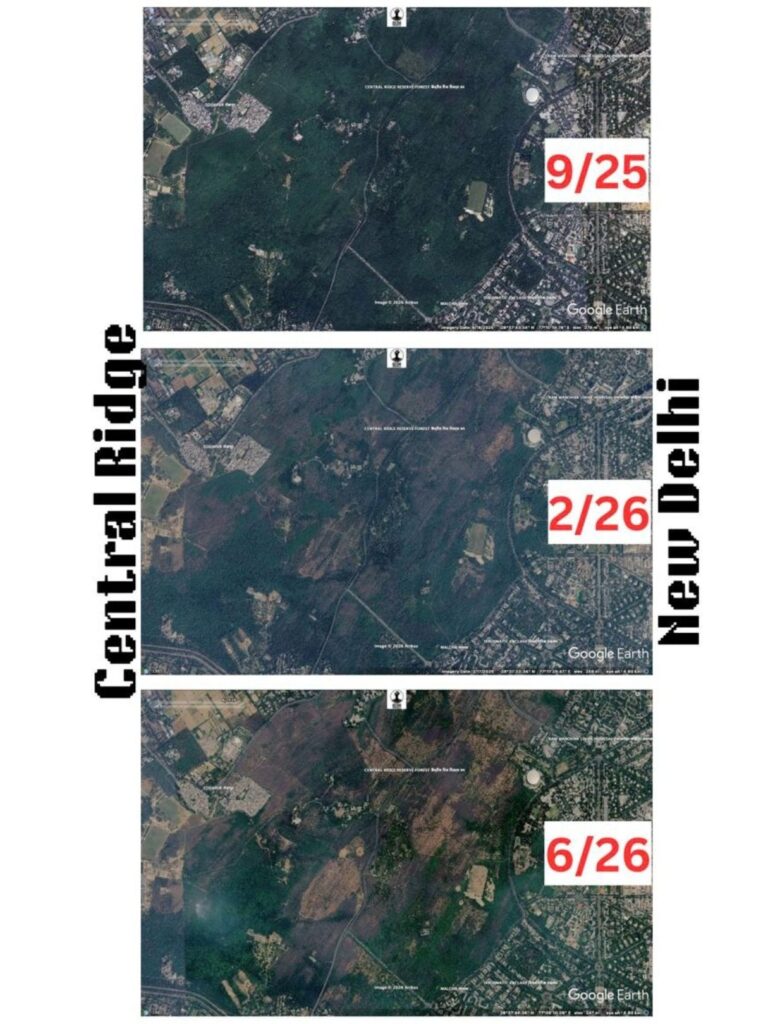
After protests against the proposed use of lindane and chlorpyrifos, insecticides known to be highly toxic to several bird species, to kill termites, which are considered ecosystem engineers in dry forest ecologies like the Central Ridge, the forest department issued a reversal. However, even though the protests reversed the insecticide usage, the fundamental project continues. Despite the fact that the Delhi government declared around 673 hectares of the 864-hectare Central Ridge in May 2026, an article published in the Hindustan Times in June 2026 reported that the plan was moving forward with patches being “cleared” of trees, shrubs and other vegetation. The Hindu also reported that the initial tender made no mention of clearances from any competent authority for the project estimated to cost around Rs. 5 crore, despite Supreme Court directives that explicitly state that whether a forest is reserved or deemed as reserved, any non-forest activity requires prior approval.
While the work happening in the area is legally considered to be under the purview of restoration according to the officials, ecologists bring attention to a different reality. Vallari Sheel, an urban ecologist and tree expert, stated, “Restoration is generally a long, slow and gradual process, and the use of heavy machinery is kept minimal. The scale and the speed at which the forest department is conducting the clearing is not ecologically sound. Using heavy machinery like JCBs to clear forests is not only damaging the topsoil, but in the process, they are also removing native vegetation, especially the shrubs and under-canopy vegetation, along with the invasive species in the area.” She further added, “While on paper only invasive trees are being removed, in reality, we have seen natives such as kair, gangeti, adusa and many other native species have also been removed. Unfortunately, there is no clear idea about the extent of the damage, since it is a reserved forest and members of civil society are not allowed to go in there anymore. This is not restoration; this is destruction of a forest to make a plantation.”
When conservation becomes urban consumption
The issue is not just the announcement of using pesticides or clearing patches of perfectly good forests to create parks, but also the more fundamental issue of commodifying and converting natural ecosystems for urban consumption. A forest does not require outdoor cafes, gyms, steel railings or bamboo gazebos. It does not require an aesthetic space for us to interact with it. A forest should be left alone for the inhabitants who live in it and sustain it.
The philosopher Timothy Morton, in his work Dark Ecology, argued that the idea of ‘nature’ as something separate from human life is itself part of the problem. We imagine nature as something outside of us, whether it be a landscape to admire or a resource to use, like a cycling track or a yoga retreat. According to Morton, it goes back to the idea of organising land around cultivation that emerged with settled agriculture. A plant can be seen as a weed or a food source. An insect could be seen as a pollinator or a pest. He proposes the idea that our idea of care cannot just stop at appreciating nature but also care about forms of life that simply exist, without judging whether it’s useful to us in any way. We have to stop being the central characters of conservation, organising around themes constructed by us for our convenience and pleasure.
The Ridge is not ours alone
The Ridge challenges the way people usually think about conservation in a city. We tend to value green spaces for what they give us, like shade, cleaner air, recreation, or a place to walk or exercise. But a forest does not need to justify its existence through its usefulness for people. It can have value simply because it is habitat for other forms of life. This does not mean that people do not have any place in these landscapes. It means recognising that we are not the only inhabitants. The birds nesting in its trees, the insects moving through its vegetation, mammals using it as shelter and organisms living in its soil are not visitors to a green space designed for us. We are sharing their habitat.
Perhaps that is what the Ridge can teach us during this Wildlife Week. Conservation in a city cannot only mean encircling green spaces on a map. The protection of ecological relationships that thrive in those spaces and keep them alive is just as important. Maybe the question we need to ask ourselves is not how to preserve the nature around us, but how to leave enough of it alone and intact for the life that is already there.
About the author
Pooja Das
A writer and researcher, working in the intersection of climate change, media, and storytelling.